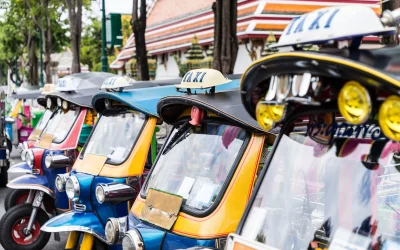
Taxis are not just means of transport, but real symbols of urban cultures in different corners of the world. Each country has its own iconic model that has marked eras, told stories and accompanied millions of passengers.
Here is a detailed overview of the world’s most famous taxi models, from tradition to modern times.
British taxis
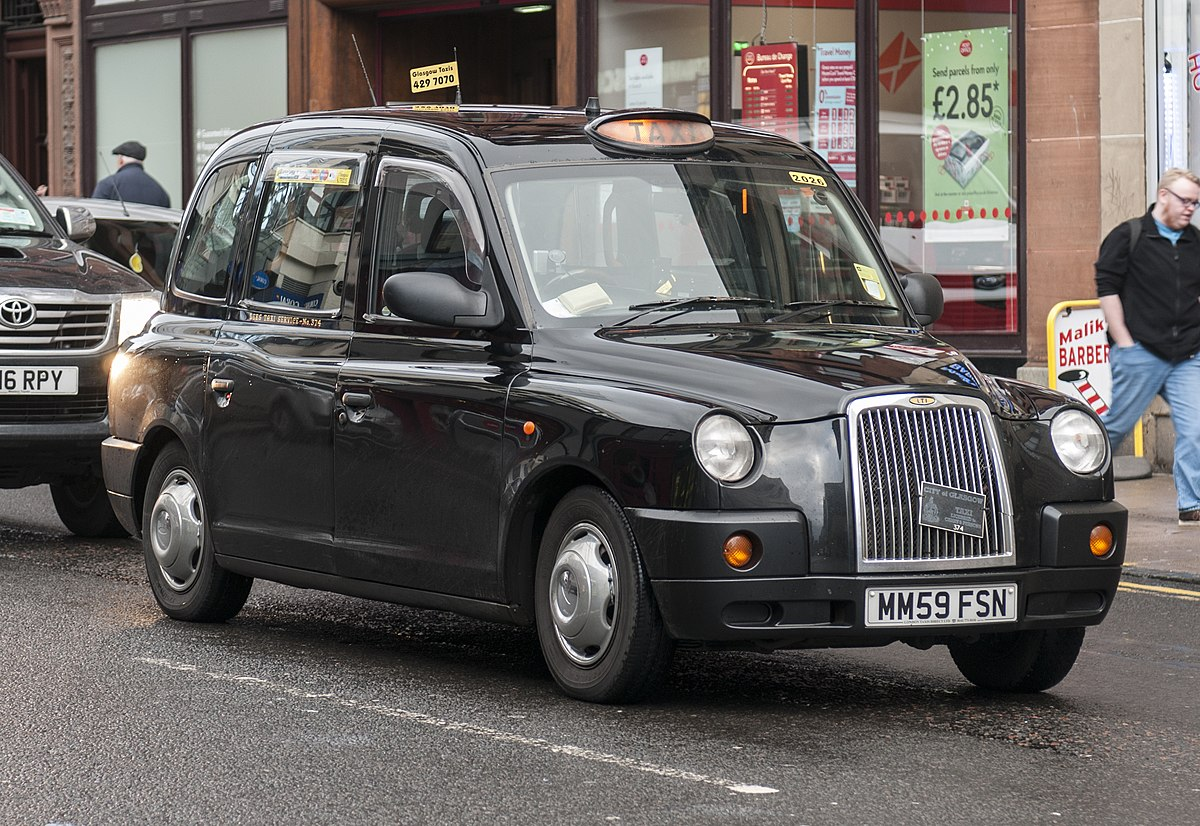
One of the most famous taxis in the world is the London Black Cab, officially known as the Hackney Carriage, which boasts a rich and fascinating history that began in the nineteenth century. The undisputed symbol of London, the Black Cab has gone through different eras, adapting to the technological and cultural transformations of the city.
The beginning of the Black Cab story
The origin of the history of the famous Black Cab has its roots in 1897, with the introduction of the Daimler Victoria, the first taxi in the world to be equipped with a taximeter. This vehicle, produced in Germany by Gottlieb Daimler, represented a real revolution for urban public transport. The taximeter, an innovative tool for calculating the cost of the ride in an accurate and transparent way, replaced direct negotiations between passengers and drivers, making the service more reliable and organized. The Daimler Victoria, with its internal combustion engine and two-passenger design, marked the starting point for the modernisation of taxis, charting the course for London’s legendary cabs and transforming urban mobility in many countries.
The iconic Austin FX4
The Austin FX4, introduced in 1958, was another of the most iconic taxis in London’s history, quickly becoming a symbol of the British capital. Designed to meet urban demands, it boasted revolutionary features such as a very tight turning radius, ideal for busy roads, and a spacious and comfortable interior that ensured a pleasant journey for passengers. The FX4 was recognizable by its distinctive black color, rounded design, and high roof.
Linked to the image of London’s famous Black Cabs, it has embodied the tradition and urban spirit of the city, becoming the protagonist of films and TV series, as well as of the daily life of Londoners. It has been in use for decades, with continuous updates that have improved performance and design without altering its identity.
Later versions, such as the Fairway Driver and TX4, retained the iconic styling, improving emissions and efficiency.
The transition to environmentally friendly vehicles
Over time, Black Cabs have continued to evolve to meet the needs of the population and environmental challenges. Today, the LEVC TX, a hybrid electric taxi, has taken the place of many of the traditional diesel vehicles. This model represents a step forward towards more sustainable mobility, reducing polluting emissions without compromising efficiency.
French taxis
The history of French taxis is closely linked to the evolution of automotive engineering and reflects the spirit of innovation and style that characterize the country. Four models, in particular, have marked different eras, helping to shape France’s image as a pioneer in the transport sector. Here’s a story of the milestones, from the early days of the Renault AG1 to the modern practicality of the Peugeot 406.
Renault AG1 “Taxi de la Marne”
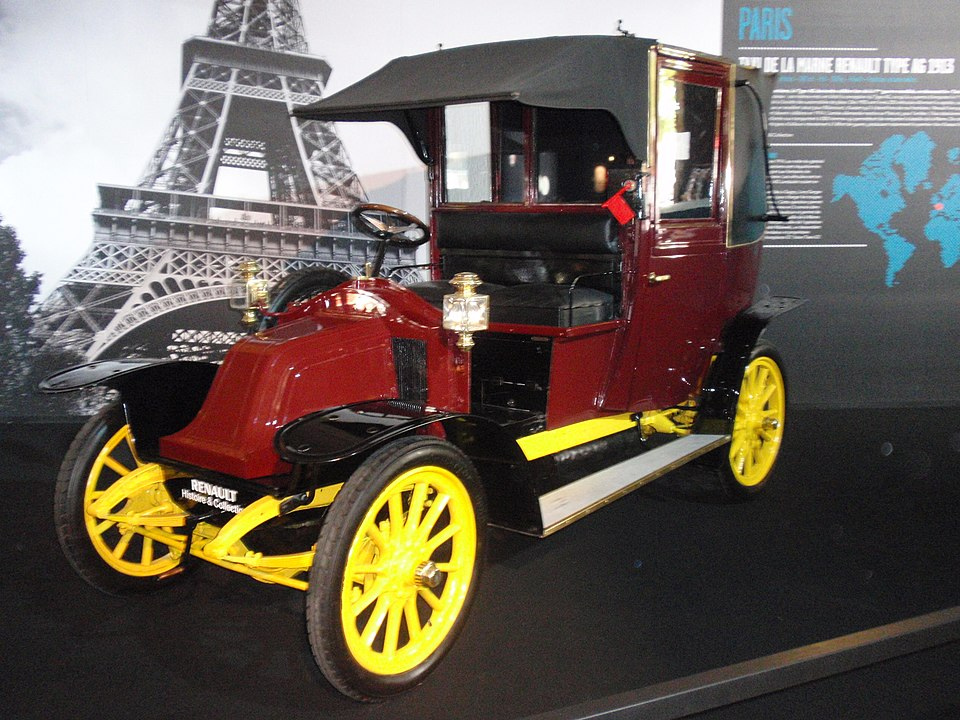
The Renault AG1, known as the “Taxi de la Marne”, is considered the forerunner of modern taxis in France. Launched in 1905, it was equipped with a robust construction and a reliable 1.2-liter engine, making it ideal for dealing with the difficulties of the roads of the time. It was thanks to its practicality that it gained popularity as a means of urban transport.
The Renault AG1 became famous during the Battle of the Marne, when about 600 of these vehicles were requisitioned to transport soldiers to the front. This patriotic gesture not only cemented its reputation, but turned the taxi into a symbol of national commitment. His figure remains etched in the collective memory, representing resistance and solidarity.
It was one of the first vehicles to make public transportation accessible and reliable for ordinary people. Elegant in its simplicity, the Renault AG1 paved the way for generations of taxis, giving an unprecedented boost to urban mobility.
Citroën Traction Avant
The Citroën Traction Avant represented a technological revolution in the world of taxis. Introduced in 1934, it was among the first front-wheel drive cars and featured a monocoque body, which guaranteed greater safety and stability. These innovations made it ideal not only for city traffic, but also for ensuring a comfortable and safe journey for French passengers.
With its aerodynamic lines and spacious cabin, the Traction Avant quickly became one of the most popular choices for taxi drivers. Its characteristics made it indispensable on the streets of Paris, where it combined functionality and refinement, capturing the attention of citizens and visitors alike.
In addition to its nationwide popularity, the Traction Avant is remembered as a symbol of French elegance and ingenuity. It is still recognized today as one of the most significant vehicles in automotive history.
Citroën DS
The Citroën DS, introduced in 1955, brought new light to the taxi industry thanks to its futuristic design and technological innovations, such as self-adjusting hydropneumatic suspension. This system ensured an extremely smooth journey, even on the roughest roads, making it a luxurious choice for passengers.
With its iconic aerodynamic profile and innovative lighting, the DS still stands out today as a design masterpiece. Although it was less common as a taxi than the Traction Avant, it was still used in cities such as Paris, where it was the perfect choice for those who wanted comfortable and classy journeys.
Peugeot 406
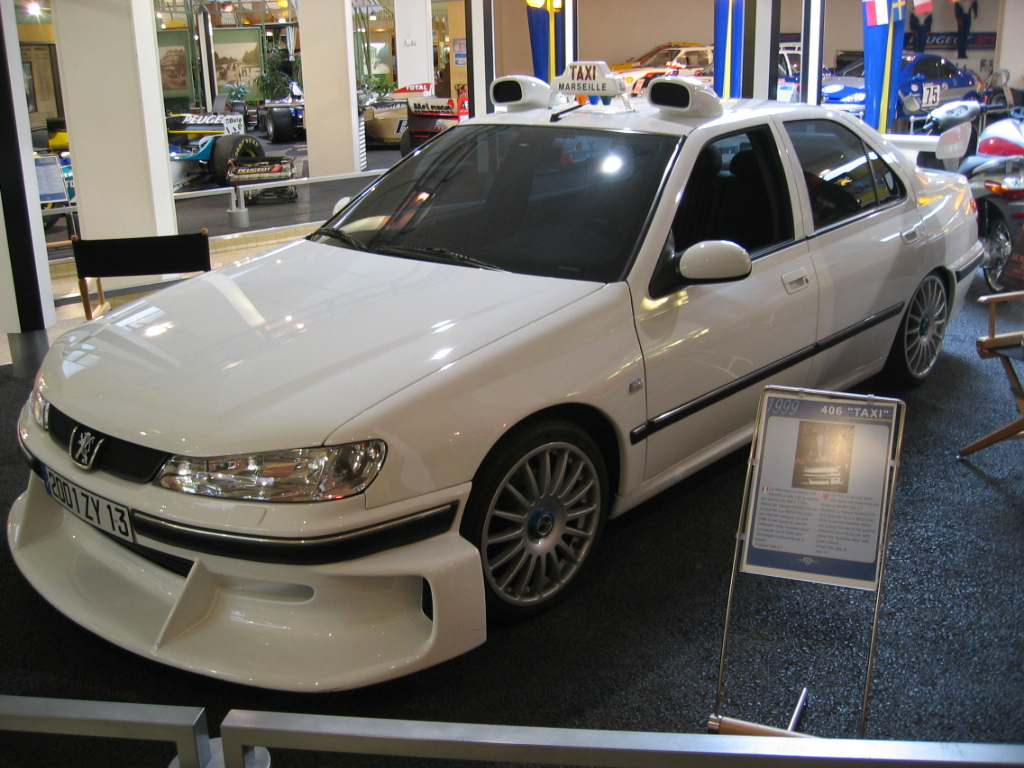
In the 90s, the Peugeot 406 became the benchmark for French taxis due to its reliability and practicality. Launched in 1995, it had a sleek, streamlined design, an efficient engine, and a comfortable interior, making it ideal for taxi drivers facing long working days.
Thanks to its spaciousness and spacious trunk, the Peugeot 406 could transport passengers and luggage without difficulty, making it perfect for travelers and families. The vehicle also boasted economical maintenance, a crucial factor for taxi drivers.
The 406 is often associated with the famous film series “Taxxi” directed by Luc Besson, where the model was transformed into a high-performance car for breathtaking car chases. This helped cement his cultural status as an icon of French modernity.

American taxis
The United States has a long tradition of taxis, which have evolved from simple means of transport into real urban symbols. Icons on American roads not only tell stories of mobility, but also embody the dynamic and fast-paced spirit of large metropolises such as New York and Chicago. Two models, in particular, have marked different eras, leaving an indelible imprint on popular culture and the collective imagination. The rugged Checker Marathon, with its distinctive design, and the versatile Ford Crown Victoria, synonymous with reliability, represent two milestones in the history of American taxis, reflecting the evolution of urban mobility over the decades.

Checker Marathon
The Checker Marathon was the taxi that more than any other defined American roads, especially those of New York. Introduced in 1961, it was known for its robust design and the ability to comfortably accommodate up to six passengers thanks to the enlarged rear seats. Its simple but functional structure made it ideal for withstanding the daily wear and tear of a metropolis in constant motion.
Its unmistakable rectangular body and distinctive yellow color have made it a symbol of American popular culture, appearing in countless films and television series. One of his most iconic film roles was in Martin Scorsese’s film Taxi Driver (1976), where the Checker Marathon becomes an extension of the protagonist Travis Bickle, played by Robert De Niro. The taxi, with its isolated cockpit and the streets of a nocturnal and gloomy New York, becomes the symbol of alienation and inner conflict.
Loved by taxi drivers alike for its mechanical longevity and passengers for its comfort, the Checker Marathon remained an icon until it ceased production in 1982, leaving an indelible legacy in American culture.
Ford Crown Victoria
In the 1990s, the baton as the predominant taxi passed to the Ford Crown Victoria, which was produced from 1992 to 2011. This rear-wheel drive model was appreciated for its reliability, low maintenance costs and ample interior space, which provided comfortable journeys for both drivers and passengers. The Crown Victoria became a constant presence on U.S. roads, distinguishing itself with its sleek profile, durability, and solid performance over long distances. Although the model has gradually been replaced by more modern and environmentally friendly vehicles, its legacy remains in the hearts of many taxi drivers and in the imagination of American urban life.
German taxis
Germany has always stood for automotive engineering of excellence, and this is also reflected in its taxis, many of which have become synonymous with reliability, quality and comfort. Among the most iconic taxi models, Mercedes-Benz has played a leading role, offering vehicles that have defined public transport for decades.
Here is a tale of two legends of German roads, organized chronologically.
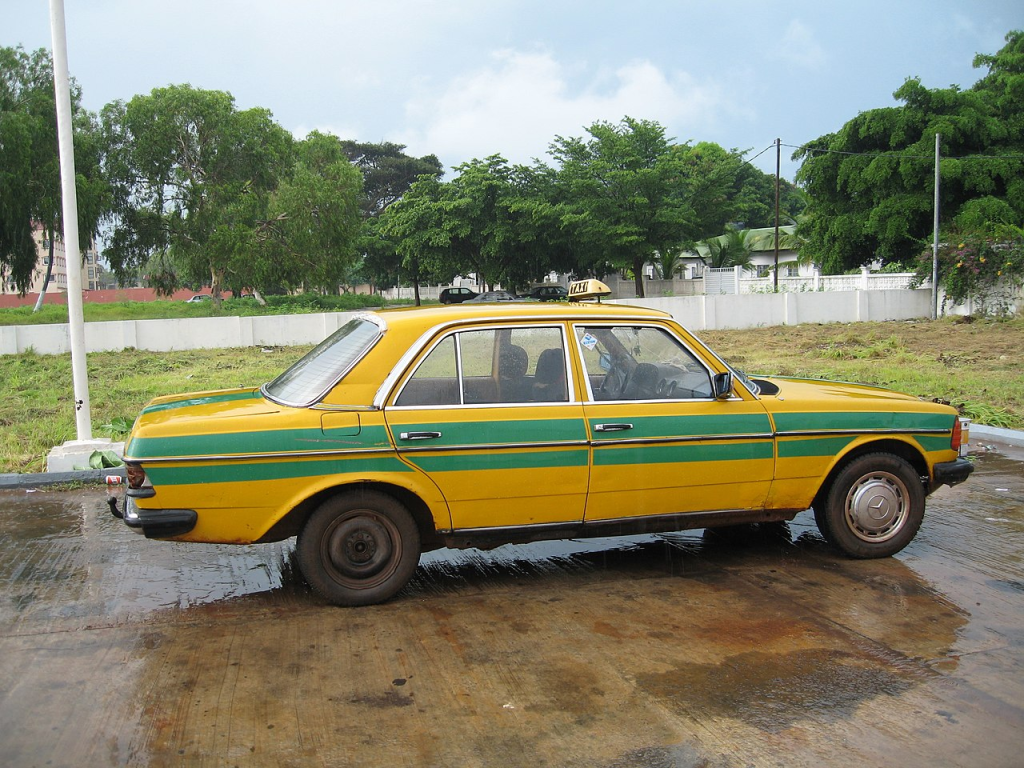
Mercedes-Benz W123
The Mercedes-Benz W123, produced between 1976 and 1985, is often considered the taxi par excellence in Germany. This model, known for its robustness and longevity, stood out as one of the most reliable vehicles of its era. Its popularity among taxi drivers was no coincidence: the W123 offered a highly reliable engine, a durable chassis and easy maintenance, qualities that are essential for a vehicle intended for intensive use.
In addition to its outstanding reliability, the W123 was equipped with a comfortable interior, designed to ensure an enjoyable experience for both passengers and drivers. The elegant and timeless design, combined with its unmistakable light beige colorway, became a symbol of Germany in the 70s and 80s. Many taxi drivers adopted it not only for its durability, but also for the ample space available for passengers and luggage.
To this day, the Mercedes-Benz W123 enjoys an almost legendary status among long-time motoring enthusiasts and taxi drivers. It is remembered as a model that set the standards of the automotive industry and a benchmark for taxis across Europe.
Mercedes-Benz E-Class W212
As the new millennium approached, Mercedes-Benz continued to innovate, and the E-Class W212 model, produced between 2009 and 2016, took German taxis to new levels of technology and comfort. This vehicle has been designed to be not only efficient, but also environmentally friendly, thanks to modern engines and low fuel consumption.
The W212 combined sophisticated design with exceptional practicality. The spacious interior equipped with advanced technology offered a comfortable journey in any situation. In addition, the integrated navigation system and driver assistance devices made it easier for taxi drivers to work at a time when technology was transforming the industry.
The Mercedes-Benz E-Class W212 quickly became the new face of German taxis, mainly due to its sustainability and advanced performance. It was a perfect choice to balance tradition and innovation, representing a step forward for urban mobility in the context of a growing attention to the environment.
Italian Taxis
Taxis have always played a fundamental role in Italian urban mobility, reflecting the evolution of design, technology and passenger needs. From iconic models of the past to modern solutions, each car tells a part of the history of transport in Italy.
Here is an overview of some of the most representative taxis that have marked different eras.

Fiat 600 Multipla
The Fiat 600 Multipla was a revolution in the Italian taxi scene. Produced between 1956 and 1967, this compact yet incredibly versatile car was often used for urban transport in cities such as Rome and Milan. The Multipla could accommodate up to six passengers, a surprising result due to its small size. The rear engine made it possible to optimize interior space, while the flexible seating configuration made it ideal for carrying groups of passengers or extra cargo. Its characteristic rounded shape and practicality have made it a reference point in the history of Italian taxis.
Fiat 1100 D
In the 60s, the Fiat 1100 D became the taxi of choice in many Italian cities, appreciated for its sober but elegant style and robustness, essential in the urban contexts of the time. The 1100 D was chosen primarily for its passenger comfort and mechanical reliability, making it ideal for the heavy daily use of taxi drivers. This model became a symbol of the modernization that was going through Italy in those years, embodying the transition to a more refined and functional mobility.
Fiat Tipo
Among the most contemporary models used as taxis in Italy, the Fiat Tipo, back in vogue in its modern version produced since 2015, is an example of practicality and technology. With its spacious cabin, efficient fuel consumption and low maintenance costs, the Tipo is a popular choice among taxi drivers in Italian cities. Equipped with advanced navigation systems and safety technologies, this model offers a comfortable and safe travel experience for both drivers and passengers. The Fiat Tipo embodies the evolution of the historic Italian taxi tradition, adapting it to the needs of contemporary mobility.
Mercedes-Benz E-Class
The Mercedes-Benz E-Class is one of the most iconic and recognizable high-end taxis in Italy and Europe. Introduced in the 90s, it is appreciated for its premium comfort, reliability and high performance. With a sleek design and state-of-the-art technology, the E-Class is the ideal choice for taxi drivers who want to offer a high-end travel experience. Spacious interiors and advanced safety systems make every journey comfortable and safe, for both passengers and drivers. The Mercedes-Benz E-Class has become a symbol of luxury and professionalism in the world of urban transport.
Swiss Taxis
Switzerland has a long tradition of using Mercedes-Benz models as taxis, symbols of reliability and style. From the streets of Zurich to those of Lugano, these cars have been a benchmark for public transport.
Let’s discover two iconic models that have made the history of the sector: the Mercedes-Benz 170 V and the Mercedes-Benz W123.
Mercedes-Benz 170 V
The Mercedes-Benz 170 V was one of the first iconic models to be widely used as a taxi in Switzerland. Produced between 1936 and 1955, this vehicle represented the excellence of German engineering, combining robustness and elegant design. The 170 V stood out for its mechanical reliability and relatively low maintenance costs, which were key characteristics for taxi drivers at the time. Thanks to its comfortable interior and adequate space for passengers and luggage, it became a popular choice in Swiss cities such as Zurich and Geneva. This model is remembered as a symbol of European efficiency and style in the difficult years of the mid-twentieth century.
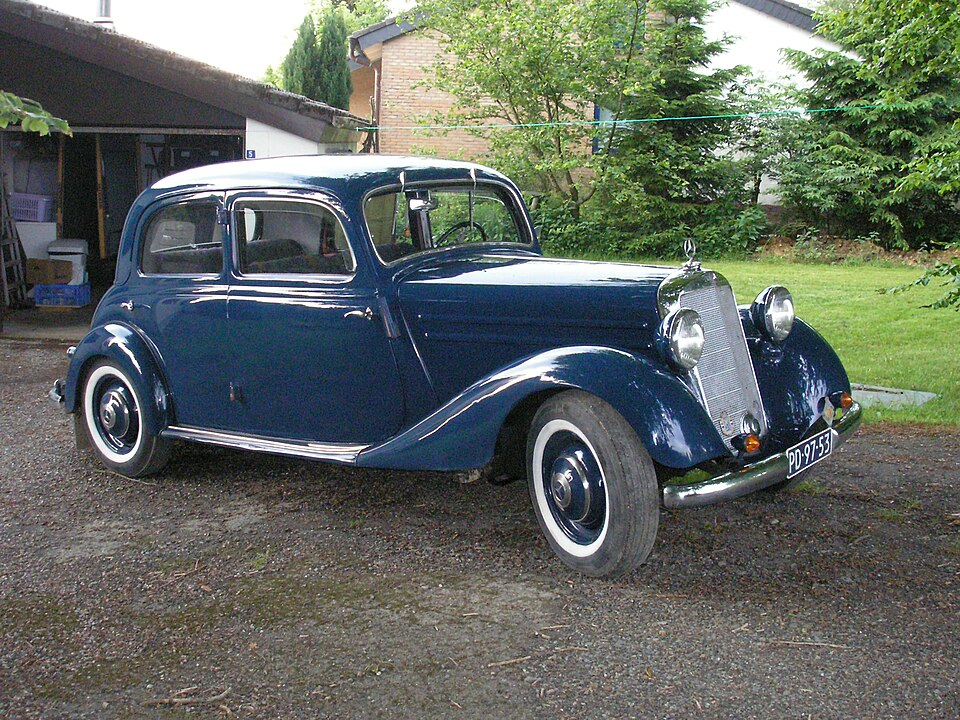
Mercedes-Benz W123
In the 70s and 80s, the Mercedes-Benz W123 became the benchmark for Swiss taxi drivers. Produced between 1976 and 1985, it was famous for its extraordinary durability and impeccable build quality. The iconic design, characterized by clean and sober lines, perfectly matched Switzerland’s image of precision and reliability. The large living space and interior comfort made it an ideal option for public transport in cities and for long-distance travel. Even today, the W123 is considered a legendary model, capable of withstanding the test of time and the wear and tear of intense professional use.
Indian taxis
Hindustan Ambassador
The Hindustan Ambassador was not just a car, but a fundamental symbol of Indian urban mobility, especially in the taxi sector. From 1958 to 2014, this iconic car dominated the streets of Indian cities, becoming synonymous with public transport and an indispensable element of everyday life.
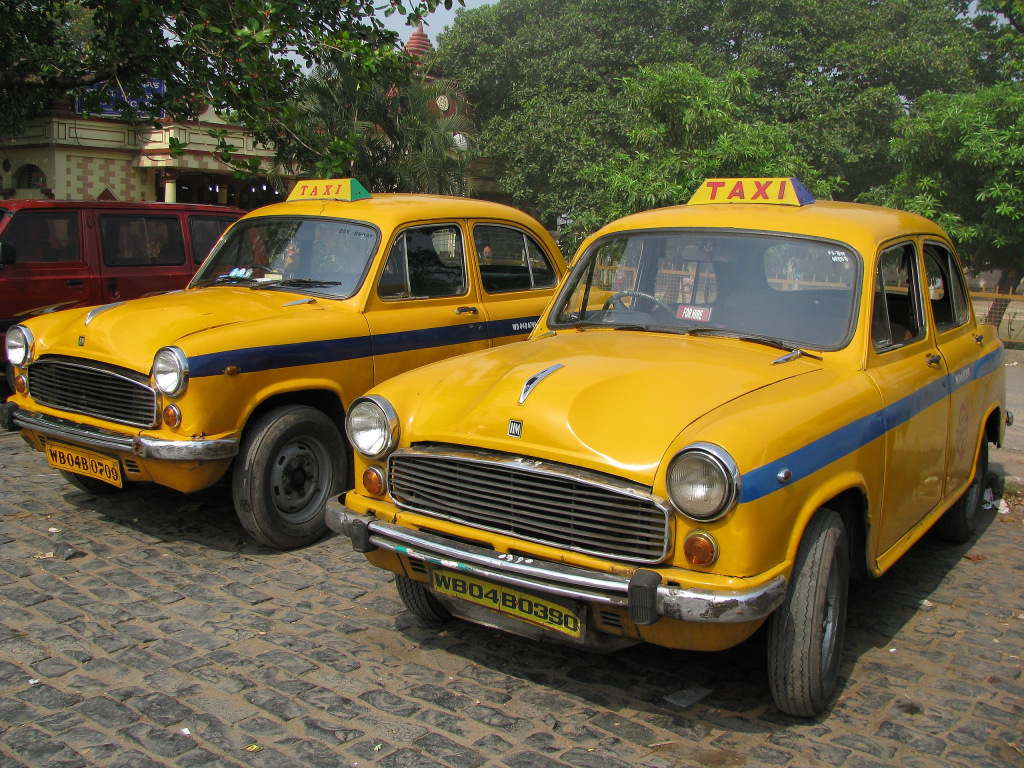
Based on the British Morris Oxford Series III, the Ambassador was designed to adapt perfectly to the climatic, road and socio-economic conditions of India. Its robustness and ability to cope with rough roads and heavy traffic made it the ideal car for the taxi industry. It was not uncommon to see rows of Ambassadors in the typical colors of Indian taxis: black with the classic yellow roof, an image recognizable practically everywhere, from Kolkata to Mumbai, to Delhi.
The durable construction and simple maintenance were a plus for taxi drivers, who often traveled long distances on rough or congested roads. The spacious interior provided comfort for both drivers and passengers, while the roomy trunk was perfect for carrying bulky luggage, making the Ambassador a natural choice for travelers and commuters.
Its rounded silhouette and traditional design added a touch of nostalgia and charm, making it easily recognizable among the many modern cars that began to invade the streets. Ambassador taxis were a familiar presence not only in cities, but also in Bollywood films, where they were often used to represent the real life of urban India.
Even after its production ended in 2014, the Hindustan Ambassador remains an indelible symbol of Indian taxis. For many, the memory of a trip in an Ambassador taxi, perhaps with the classic black and yellow, evokes images of crowded cities, incessant horns and a sense of belonging to the streets of India. Despite times changing and modern taxis taking over, the Hindustan Ambassador continues to be an essential part of India’s transport history and an icon that has served generations of passengers with reliability and style.
Japan. Japanese taxis.
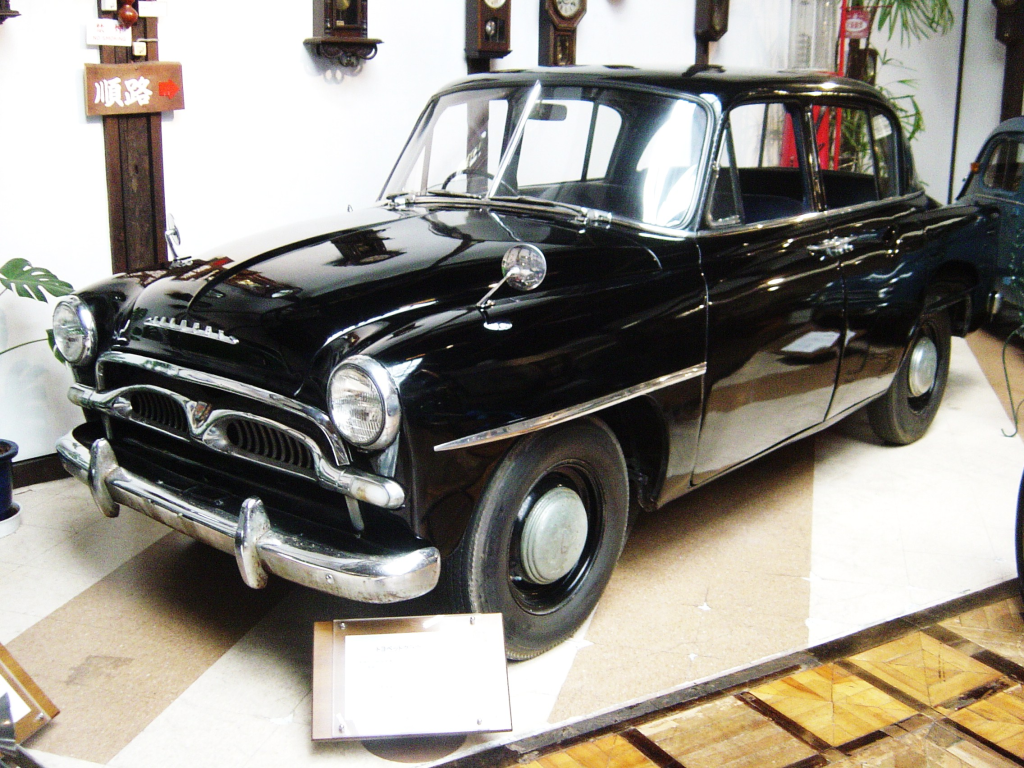
Toyota Crown Comfort
The Toyota Crown Comfort has been the quintessential taxi in Japan for over two decades. Produced from 1995 to 2017, this car was designed specifically to meet the needs of Japanese taxi drivers. Characterized by a simple and essential design, the Crown Comfort offered a spacious and comfortable interior, facilitating access even for people with mobility difficulties thanks to its large doors. The reliable engine, economical maintenance and fuel efficiency made it perfect for urban traffic, especially in cities such as Tokyo and Osaka. This model has become an icon of Japanese roads, so much so that its square profile and classic black or white color are an integral part of the collective imagination linked to urban transport in Japan.
Chinese Taxis
Santana Volkswagen
The Volkswagen Santana has been one of the most distinctive and widely used taxis in China, especially in large cities such as Shanghai and Beijing. Produced from 1983 to 2012, the Santana was the result of the growing collaboration between the Chinese and foreign automotive industries. This model was appreciated for its robustness, reliability and ease of maintenance, qualities that were essential for tackling the roads and heavy traffic of Chinese urban areas. Santana taxis were generally painted yellow and green or red and silver in some areas, bright colorways that made them easily recognizable in the chaos of the city.
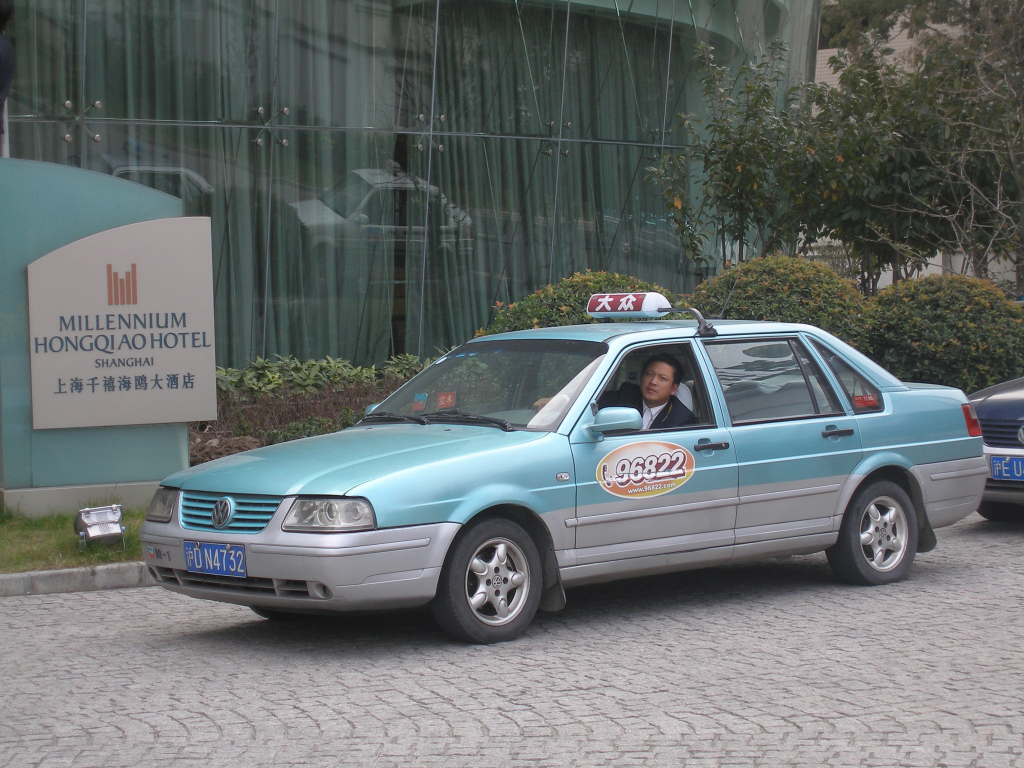
Its spacious interior and practical design made it a natural choice for public transport, while its widespread use made the Santana an iconic element of everyday life in China. Although production has ended, its image remains deeply rooted in the Chinese cultural imagination as a symbol of the era of rapid modernization and economic development.
Cuban Taxis
Chevrolet Bel Air and the streets of Cuba: between classics and local creativity
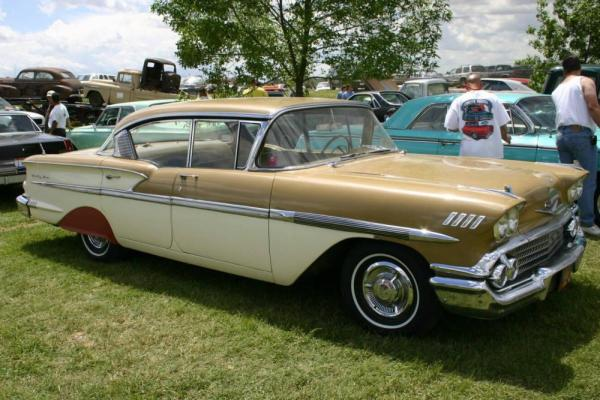
Between the 1950s and 1970s, one of the most iconic symbols of Cuban roads was the Chevrolet Bel Air, a car that became synonymous with taxis for much of the island. Due to the economic restrictions imposed by the embargo and the difficulty of importing modern cars, Cubans have developed an extraordinary skill in keeping these classic American cars operational, often using makeshift spare parts or adapting components from other cars. The result is a fleet of vintage taxis, characterized by the bright colors and unmistakable design of American cars of the mid-twentieth century. The Bel Air, with its rounded lines and retro charm, is not just a means of transportation, but a symbol of the resilient, creative, and ingenious spirit of the Cuban people. Even today, these vintage taxis are one of the main attractions of the island, offering tourists an authentic journey through time and adding a unique charm to the cityscape.
But Cuba’s transportation landscape doesn’t stop at vintage taxis like Bel Air. Alongside these classics, another symbol of Cuban streets has earned a special place: the cocotaxi. This curious means of transport, a kind of motorized tricycle with a shell-shaped body, vaguely resembles a coconut – from which it takes its name. Created for tourist transport, the cocotaxi is loved for its practicality and extravagant appearance. It is perfect for getting around city centers and offers visitors a fun and unusual experience. Although less iconic than the Bel Air, the cocotaxi is now an integral part of the Cuban landscape and represents a modern example of local creativity in addressing the challenges of mobility on the island.
African taxis
Peugeot 504 and African durability
In the 1970s, the Peugeot 504 established itself as one of the most iconic and popular vehicles in Africa, especially as a taxi. This success is due to its extraordinary combination of robustness, reliability and mechanical simplicity, characteristics that made it perfect for dealing with the difficult road conditions of many African regions. With roads often covered in dust, littered with potholes and characterised by extreme climates, the Peugeot 504 proved that it could withstand all these challenges without compromising on performance.

In addition to its ability to withstand wear and tear, the 504 also stood out for the comfort it offered passengers, a crucial aspect for those who spent hours in the seats on long journeys. This balance between convenience and comfort made it a go-to for many public transport operators. The simplicity of its mechanical design also made repairs easier, allowing local drivers to carry out maintenance work even in areas without well-equipped workshops.
Even today, decades later, it is still possible to find Peugeot 504 in service in some parts of Africa, a fact that testifies not only to the build quality of the vehicle but also to the emotional attachment that many communities have developed towards this legendary car. The Peugeot 504 is not just a car: it has become a symbol of resistance and adaptability, capable of leaving an indelible mark on the history of mobility in places characterized by extreme conditions.
Taxis and the future of urban mobility
Throughout history, taxis have continued to evolve, adapting to the needs of cities and their inhabitants. From pioneering models such as the Daimler Victoria, through cultural symbols such as the Checker Taxi and the Austin FX4, to modern vehicles such as the Toyota Comfort and the Mercedes-Benz E-Class, every era has had its iconic taxi that has represented the transformations of urban mobility.
Today, as we see the introduction of electric vehicles and digital ride-sharing platforms, it’s crucial to remember how these models have helped shape the urban transportation landscape. Each taxi tells a story, connecting past, present and future. Taxis are not just means of transportation, but pieces of culture that continue to define the cities they serve.
Excerpt to add and link to the article: History of the taxi
Taxis have always been much more than just means of transport. They are cultural symbols, protagonists of the streets all over the world and silent witnesses of eras, stories and technological transformations. Each country has its own iconic model of taxi, capable of embodying not only the progress of urban mobility, but also the unique identity of its cities and inhabitants.
In the UK, the London Black Cab is one of the most popular taxis in the world. Its history began with the Daimler Victoria in 1897, the first metered taxi, which revolutionized urban transport by offering precise and reliable rides. Over the years, models such as the Austin FX4, introduced in 1958, have cemented the image of the Black Cab as a symbol of London. This vehicle, with its distinctive black design and extraordinary manoeuvrability capabilities, has become a family icon on the streets of the British capital. Today, the LEVC TX, a hybrid electric taxi, represents a new era of sustainability, integrating modernity and respect for the environment.
France has a rich tradition of taxis, starting with the Renault AG1, known as the “Taxi de la Marne”, which gained fame during the First World War by transporting soldiers to the front. This model not only improved urban mobility, but also became a symbol of solidarity and patriotism. Subsequently, the Citroën Traction Avant revolutionized the industry in the 1930s thanks to its front-wheel drive and safe, stable design, while in the 1950s the refined Citroën DS, with its hydropneumatic suspension, guaranteed extraordinarily comfortable journeys. Finally, the practical and modern Peugeot 406 became, in the 90s, a reference for reliability and versatility, contributing to the appeal of taxis in French cities.
In the United States, taxis have played an important role in popular culture. The Checker Marathon, introduced in 1961, is arguably America’s most iconic taxi. With its rugged design, deep yellow color, and expanded interior space, it has been the beating heart of New York’s streets for decades. In the 1990s, the Ford Crown Victoria took its place as a protagonist, thanks to its reliability and spacious interior, becoming a constant presence in US metropolises until the 2000s.
Germany, synonymous with engineering excellence, has also shaped the taxi landscape with vehicles of the highest quality, such as the Mercedes-Benz E-Class, known for its elegance and durability. These taxis represent the perfect combination of style, safety and technological innovation, confirming Germany’s importance as a leader in the automotive sector.
These iconic examples tell how taxis, in addition to simplifying mobility, have become true cultural symbols. Their impact is reflected not only in everyday functionality, but also in collective memory, technology and the link with the cities in which they operate. Each model, from the most classic to the most modern, brings with it stories of progress, tradition and innovation, proving that even a simple taxi journey can contain a fragment of history.