Imagine traveling from one continent to another and immediately recognize the country you are in just by looking at the color of a taxi speeding down the street. Taxis are not just means of transport: they are real urban icons.
Each color tells a unique story made up of culture, tradition and local curiosities. From the bright yellow of the United States to the elegant black of the United Kingdom or the singular green of Japan, each state has chosen its colors for reasons that go beyond practicality. Get ready to discover how the colors of taxis, different from one country to another but symbolic in every part of the world, manage to paint the great mosaic of cities!
In this article, we will explore the symbolic colors of taxis in different states, divided by continent.

North America: World Taxi Icons
United States
Yellow cabs are among the most recognizable symbols of the United States, particularly in New York. This tradition began in 1915, when John Hertz founded the Yellow Cab Company, choosing yellow for its high visibility, as confirmed by a study by the University of Chicago. New York’s yellow cabs have become a national icon, featured in movies, TV series, and pop culture, so much so that they represent the entire city. However, it should be noted that not all taxis in the United States are yellow: each city has its own characteristics and regulations. For example, in San Francisco, taxis can be white or other colors, while in Las Vegas, taxis can often be found decorated with advertisements. This demonstrates the diversity of the taxi industry in the United States, while maintaining yellow as the distinctive symbol of New York.
Mexico
Over the years, Mexico City taxis have undergone numerous style and color changes. Until the 1990s, taxis were predominantly green with white roofs, a look that remained a symbol of the city for years. However, in 2014 a new color scheme was introduced – pink with a white roof. In addition to this distinctive combination, the government has also worked to improve taxi registration and identification systems, introducing visible license numbers and more regulated vehicles. Despite this modernization, the colors of taxis can vary in other cities in Mexico: in Guadalajara, for example, it is common to see white taxis with green stripes, while in Monterrey, taxis are often yellow. This diversity reflects local traditions and the preferences of different regions.

Canada
Unlike the United States or Mexico, Canada does not have a unique national color for taxis, as each city operates its own public transportation system with specific characteristics. In Vancouver, yellow cabs are widespread and easy to recognize, with a style similar to that of New York. Toronto, on the other hand, features a wide range of colors: the famous Beck Taxi uses an orange and green combination, while other companies opt for white and burgundy scheme or other distinctive combinations. In Montreal, taxis are distinguished by the variety of colors, but they are all equipped with signal lights to be easily recognizable by passengers. In general, in Canada the aim is to make taxis clearly identifiable as public transport, regardless of their aesthetic appearance.
Europe: Tradition and Refinement
United Kingdom
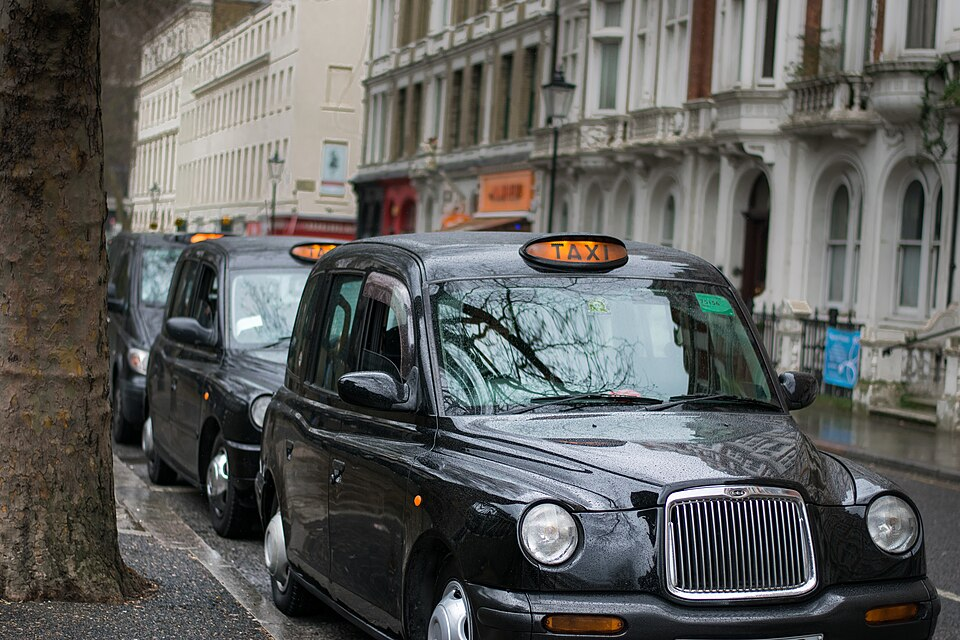
The famous black cabs, known as “black cabs,” are one of the most iconic symbols of the United Kingdom and a distinctive feature of British roads. These vehicles, designed to provide excellent comfort, are spacious, with ample legroom and accessibility for people with limited mobility, including dedicated wheelchair spaces. “Black cabs” are not only a daily mode of transportation, but are often used for special occasions such as weddings, sightseeing tours, and even movie sets. In addition, it is common for these taxis to be customized for advertising campaigns or to celebrate important national events, such as the Queen’s Jubilee or the London Olympics. Taxi driver training, known as “The Knowledge,” is one of the most rigorous in the world, requiring drivers to memorize thousands of roads and routes to deliver the best possible service.
Germany
In Germany, taxis are instantly recognisable by their distinctive beige or cream colour, a choice made to ensure elegance and visibility on city streets. This uniform colour is a hallmark of German taxis, making them easily identifiable by potential passengers. The majority of taxis in Germany are vehicles from local car brands, such as Mercedes-Benz, BMW, or Audi, underlining the country’s strong connection to high-quality engineering. It is therefore no surprise that these taxis are known for their reliability, impeccable maintenance and advanced technology, often including navigation systems and digital payments. Additionally, some German cities, such as Berlin and Hamburg, are adopting electric or hybrid vehicles to promote sustainability, demonstrating their commitment to a greener future.

Italy
In Italy, taxis are characterized by the color white, adopted as a national standard for several reasons. White, a symbol of neutrality and simplicity, was chosen not only for aesthetic reasons but also for practical reasons. This color ensures high visibility in any weather condition, both day and night, making it easily recognizable even from a distance. In addition, white reflects sunlight better than dark colors, helping to maintain lower indoor temperatures, especially during hot Italian summers. The choice of a single color, such as white, promotes uniformity and recognizability of taxis throughout the country, allowing passengers to identify them immediately, regardless of the city or region in which they are located.
Before this regulation, taxis in Italian were predominantly yellow.
Previously, there was no single color for taxis throughout Italy, and often the color was linked to the free choice of the owner or the tradition of the individual city. For example, in Milan, until the end of the 90s, it was possible to find yellow taxis.
France
Taxis in France, and particularly in Paris, are a reflection of the country’s culture and style. Unlike other European countries, French taxis do not have a unique color, but feature a variety of hues, including gray, black, and white, with some variations locally. However, all French taxis must be equipped with an illuminated sign with the words “TAXI” and a visible taximeter to comply with national regulations. In Paris, taxis are known for their level of comfort, often equipped with spacious seats and climate control. In recent years, many fleets have introduced electric or hybrid vehicles as part of efforts to reduce environmental impact. This commitment to sustainability mirrors France’s green initiatives. In some cities, such as Lyon and Marseille, taxis also offer dedicated services, such as transporting heavy luggage or options for passengers with special needs.
Asia: Colors that Tell a Story
Japan
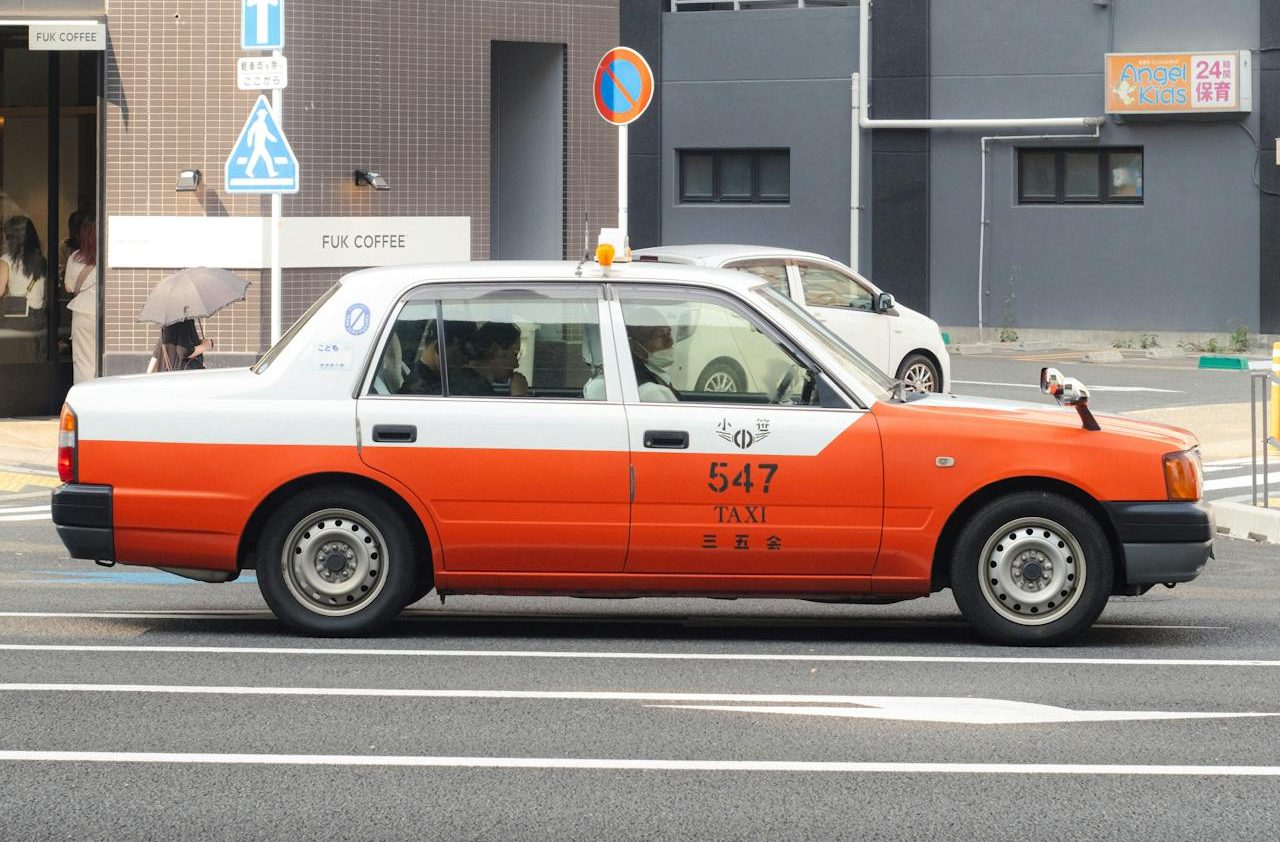
In Japan, taxis are a perfect example of efficiency and style. Although the predominant colors are green and black, there is a great variety of colors that depend on the different regions. In Tokyo, for example, it is easy to come across green taxis with yellow or white stripes adorned with colorful details. Each taxi company uses a unique color scheme, which becomes a real hallmark. Many taxis have automatic doors, a detail that emphasizes Japan’s focus on convenience and innovation.
India
Taxis in India are more than just a means of transportation, they are a cultural symbol of the country. The classic color is black with a yellow roof , a design that immediately brings to mind the bustling streets of cities such as Mumbai and Kolkata. In metropolises, traditional taxis, often ambassador models, continue to dominate the scene, but in other areas, more modern taxis, such as white or all-yellow cars, are starting to spread. In many regions, taxis take different forms, such as autorickshaws, small three-wheeled vehicles decorated in bright colors, custom patterns, and handwritten phrases. These vehicles not only reflect local creativity, but also offer an economical and practical solution for getting around the chaotic traffic of cities.

Thailand
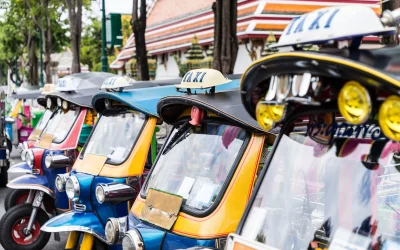
In Thailand, taxis are an explosion of bright colors that transform the streets into a real traveling art gallery. You will find hot pink vehicles , bright greens, deep oranges, bright blues, and many other shades. In addition, some taxis combine two colors, such as green and yellow or blue and red. These colors are not only an aesthetic choice, but also represent functional information: for example, the colors can indicate whether the taxi is privately owned or affiliated with a company. In Bangkok, taxis are known to be quite cheap and are a practical alternative to tuk-tuks. Most of these vehicles have air conditioning, an essential comfort during hot tropical days. The range of bright colors in Thai taxis is not only visually pleasing, but it also adds a touch of energy to the experience of getting around the country.
Africa: Liveliness and Tradition
South Africa
Traditional taxis, known as “minibus taxis”, are a mainstay of the South African public transport system. These vehicles, usually white with colored stripes, not only indicate the area in which they operate, but often represent cultural or ethnic symbols, reflecting the diversity of the country. They are mainly used by workers and students to move between cities, suburbs and rural areas, offering an accessible service even in areas less served by official transport. However, the system is partly informal and not without challenges, such as overcapacity and competition between operators.
Egypt
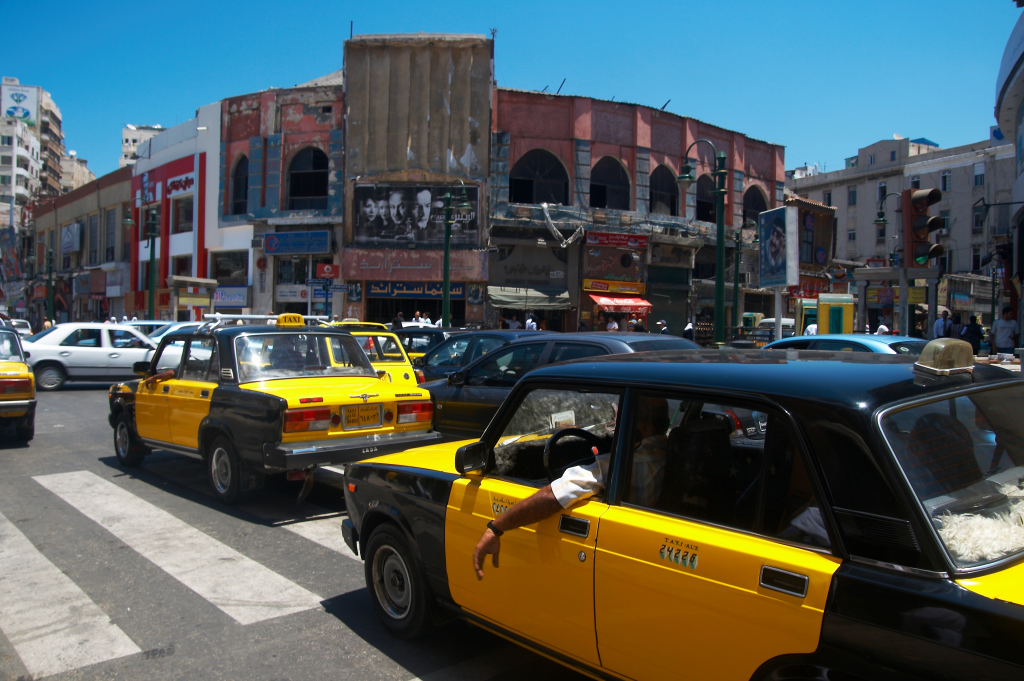
In Egypt, taxis are an essential means of transportation, especially in urban centers such as Cairo, Alexandria, and Luxor. Taxis are easily recognizable by their distinctive colors: white with a black roof or white and orange, according to local regulations, which vary from province to province. Many modern taxis have meters to ensure transparency in costs, but in many situations it is still common to bargain the price before starting the journey, especially in the most touristy areas. In addition, in recent years, competition with ridesharing apps such as Uber and Careem has begun to change the landscape of urban transportation in Egypt, offering more technological and often more reliable alternatives.
South America: Colors and Culture
Brazil
In Brazil, the color of taxis varies depending on the city and state, but taxis in Rio de Janeiro are famous for their bright yellow color with a blue stripe on the side. In São Paulo, on the other hand, white taxis predominate. In addition to the colors, Brazilian taxis often bear the official symbol of the municipality and the name of the company, and are considered safe and reliable, especially in the busiest urban areas.
Argentina
In Buenos Aires and much of the country, taxis are distinguished by the classic black livery with a yellow roof. This contrast makes them easily identifiable even on the busiest days. Argentine taxis are a true symbol of city life and are present in a widespread way, with companies providing both traditional taxis and more modern and environmentally friendly vehicles.
Colombia
Here, taxis are typically yellow, a color chosen to ensure maximum visibility on the chaotic streets of large cities such as Bogotá, Medellín and Cartagena. In addition to the color, Colombian taxis are equipped with a clearly visible identification number on the hood and doors, to protect the safety of passengers. In many locations, booking via app is becoming increasingly popular.
Chile
In Chile, especially in Santiago and major cities, city taxis are easily recognizable thanks to their black body with a yellow roof. There are also collective taxis (“colectivos”) that have other colors depending on the area and the service offered. Chilean taxis are regulated and carry special license plates for prompt identification. Payment is usually in cash, but some companies also accept payment by credit card. In addition, the popularity of ride-hailing services such as Uber and Cabify is growing rapidly in the country.
Oceania: Practicality and Unique Style
Australia
In Australia, taxis are distinguished by their variety of colors, which varies depending on the state or territory in which they are located. In Brisbane and Melbourne, for example, yellow cabs prevail, echoing the iconic style of the United States, while in regions such as Western Australia, white cabs are more common, offering a more sober and modern look. Regardless of the shade, all Australian taxis are designed to offer maximum comfort, with air conditioning essential to face the heat of the country and technological tools such as electronic payment systems, which allow you to easily pay with credit or debit cards. The service is heavily regulated to ensure safety and efficiency, with experienced drivers and vehicles subjected to regular checks.
New Zealand
In New Zealand, taxis are predominantly white, but they are distinguished by logos, lettering and personalized signs of the various companies. This makes them easily identifiable, even for first-time visitors to the country. Personalization not only makes taxis unique, but also helps to strengthen the brand of local transport companies.
Beyond Colors: Taxis as a Reflection of Urban Cultures
A journey through the colors of taxis around the world reveals how these common cars are actually a representation of local cultures, traditions and needs. From the famous yellow of New York to the green hues of Asian cities, each color choice tells a story and contributes not only to recognizability, but also to creating a sense of collective belonging. Taxis, in addition to offering mobility, thus become living symbols of urban identity, adapting to the needs of people and the peculiarities of the various countries.